 AHΞHA
AHΞHATake a second. Picture the moment.
AHΞHA prepares you: 90 seconds for your mental strength. Fourteen routines, free for everyone. Everyone gets the same two routines each day, so wherever you are, others are taking the same 90 seconds with you. Tap one to start.
90 seconds for your mental health.
Think of a moment that is on your mind. Breathe with a coach while your body calms down, and walk through the moment until it feels doable. When it comes, you have already been there. For every body, every size.
What's on your mind today?
- Pick the momentMore than 40 situations from work, life and body.
- Breathe with a coachFollow the FLOW line. A long exhale tells your body to calm down.
- See it go wellFive short scenes, then one gesture you take with you.
Free, no account, no download. Install it as an app later if you like.
Every routine is a session.
A situation to picture, a coach to breathe with, music that follows your breath. Without an account you get the routine of the day; with a free account you can mix your own.
Situation
What you see in your mind: your Monday desk, a hard conversation, three good moments of the week.
“See yourself starting it this morning — before e-mails, before the noise.”
Coach
The video plays its first half while you breathe in and its second half while you breathe out.
18 coaches, from Zineb's calm focus to Susi in sizes S to 8XL.
Music
Louder on the inhale, softer on the exhale. In the evening it fades out with you.
19 tracks: Māori, San, Samburu, Corroboree, Ocean, Rain, Fire…
Free. With or without an account.
No payment, no trial, no subscription. One sign-up for everyone, only if you want to choose things yourself.
Without an account
- The 14 routines of the week
- Coach, music and the FLOW line
- The app with push reminders
- Sessions friends share with you
With a free account
- Any of 18 coaches, 40+ situations, 19 music tracks
- Share sessions with your personal invite link
- See clicks and friends who joined
- Your streak, your week and your last 50 sessions
Your phone reminds you. One tap starts the routine.
- Install AHΞHAOn Android a button installs it; on iPhone use Share, then “Add to Home Screen”.
- Pick your times08:00 and 20:00, or 06:45 and 22:15 — whatever fits your day.
- Tap the messageThe routine of that moment starts straight away.
Two slow-motion layers.
AHΞHA uses a radically different technique to deepen concentration: instead of playing a video at real speed, we overlay two identical streams at 0.5× playback and 50% transparency. The result feels like real-time — but your brain is processing two slow-motion layers simultaneously.
This forced dual-attention primes the prefrontal cortex for focus — a neurological warm-up before every breathwork session.
Processing two simultaneous slow-motion streams demands selective attention and working memory — the exact cognitive resources that breathwork then deepens and sustains. Concentrate first. Breathe deeper.
The delay between the two layers is 0.05 seconds by default. Signed in, you can choose your own — or switch the layers off for one clear video.
Imagination is a training tool.
Two landing pages for people who already know that the mind plays along.
Breathe with someone.
18 coaches from Casablanca to Manitoba, each with their own sport, pace and rhythm. Open a coach to see an example session and all of their routines.
 Zinebfrom CasablancaSpecialized in endurance sport motivation and marathon preparation.
 Stevefrom OhioTop in sports psychology and competitive rowing.
 Helenafrom AthensSpecialized in Olympic weightlifting, core stability, and injury rehabilitation.
 Jennfrom PerthExpert in high-intensity interval training (HIIT) and sports nutrition.
 Leefrom SeoulSpecialized in martial arts conditioning, agility, and mental toughness.
 Jasminfrom DubaiFocuses on flexibility, athletic yoga, and holistic muscle recovery.
 Sophiafrom RomeSpecialized in cycling kinetics, cardiovascular health, and endurance pacing.
 Joeyfrom LondonExpert in strength and conditioning for team sports and dynamic movement.
 Furorafrom TokyoSpecialized in sports biomechanics, sprint training, and track & field.
 Babsifrom StockholmExpert in winter sports preparation, cross-country skiing, and cold-weather endurance.
 Tomfrom Cape TownSpecialized in outdoor adventure fitness, trail running, and functional fitness.
 Annafrom ViennaFocuses on athletic Pilates, posture correction, and joint mobility.
 Winonafrom ManitobaExpert in ice hockey conditioning, power skating, and extreme climate training.
 Yihanafrom AccraSpecialized in athletic agility, plyometrics, and explosive power training.
 Sportfrom the Digital HubThe AHΞHA AI and mascot: your 24/7 virtual assistant for all-around fitness assessments and daily motivation.
 Globalfrom the International DeskSpecialized in cross-cultural sports psychology, remote team building, and virtual coaching.
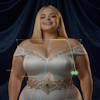 Susanfrom ParisSpecialized in fencing footwork, barre, curvy well-being, body positivity, and weight loss.
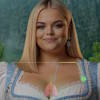 Susifrom MunichExpert in alpine hiking preparation, mountain biking, altitude acclimatization, body positivity, and weight loss.
What the research says.
Every ingredient is well studied: imagery, slow breathing, rituals, expectation. Open a study for a plain-English summary and the source.
Mechanism: how imagery, haptics & expectation move the brain
2005Elaborated Intrusion Theory of Desire — Kavanagh, Andrade & May
Psychological Review, overview: pmc.ncbi.nlm.nih.gov/articles/PMC7147977
2007Modality-specific imagery reduces food cravings — Kemps & Tiggemann
J. Experimental Psychology: Applied, pubmed.ncbi.nlm.nih.gov/17535134
2013Brief guided imagery & body scanning reduce food cravings — Hamilton et al.
Appetite (ScienceDirect), pubmed.ncbi.nlm.nih.gov/23962401
2015Motor imagery physically rewires the motor cortex — mental-practice / TMS research
Frontiers / PMC, ncbi.nlm.nih.gov/pmc/articles/PMC4412065
1998The Rubber-Hand Illusion — Botvinick & Cohen (Nature)
Nature 391:756, analysis: pmc.ncbi.nlm.nih.gov/articles/PMC9244625
2008A body illusion changes the real body — Moseley et al. (PNAS)
PNAS 105:13169, pnas.org/doi/10.1073/pnas.0803768105
2010Placebos without deception (open-label placebo) — Kaptchuk et al.
PLoS ONE 2010, pubmed.ncbi.nlm.nih.gov/21203519, meta-analysis: nature.com/articles/s41598-021-83148-6
2011How placebos change the patient's brain — Benedetti, Carlino & Pollo
Neuropsychopharmacology 36:339, nature.com/articles/npp201081
2013Rituals enhance consumption — Vohs, Wang, Gino & Norton
Psychological Science 24:1714, journals.sagepub.com/doi/abs/10.1177/0956797613478949
Vagus nerve: the physical "off-switch" breath, water & touch can reach
2021Non-invasive vagus stimulation shifts you to "rest" — taVNS & heart-rate variability
Autonomic Neuroscience 2021, RCT: ncbi.nlm.nih.gov/pmc/articles/PMC11278058
Self-perception: your "ideal body" is learned — and can be re-learned
2023Small doses of body-positive content improve body image — Fardouly et al., UNSW Sydney
Body Image (journal), UNSW, unsw.edu.au/newsroom/news/2023/01
2018The shifting "thin ideal" — Bozsik et al., Univ. of Missouri–Kansas City
Sex Roles (Springer), sciencedaily.com/releases/2018/01/180125105435
2012Stress shifts what men find attractive — Swami & Tovée
PLoS ONE 7(8):e42593, pubmed.ncbi.nlm.nih.gov/22905153
+Further reading, ritual, body-ownership, vagus & body-image studies
- Ehrsson et al. (2005) — Touching a rubber hand: fMRI links the ownership illusion to activity in multisensory premotor & parietal cortex. Journal of Neuroscience.
- Kaptchuk (2011) — Healing rituals as multisensory "dramas" (touch, ingestion, symbol, gesture) that produce specific neurobiological effects. Comparative analysis.
- Hobson, Bonk & Inzlicht (2017) — Performing a ritual blunted the brain's error/anxiety response and steadied performance under pressure. J. Experimental Psychology: General.
- Keizer et al. (2016) — Synchronous visuo-tactile stimulation reduced body-size overestimation, with lasting effects. PLoS ONE.
- Barnsley et al. (2011) — The rubber-hand illusion increased histamine reactivity in the "disowned" real arm — another real bodily change from an illusion. Current Biology.
- Jiménez-García et al. (2025) — Impact of body-positive social-media content on body-image perception. Journal of Eating Disorders. link.springer.com/article/10.1186/s40337-025-01286-y
- Clayton et al. (2017) — The positive impact of average- and plus-sized media fashion models. Communication Monographs. tandfonline.com/doi/abs/10.1080/03637751.2017.1332770
- Talbot et al. (2021) — Exposure to plus-size models and body satisfaction. researchonline.nd.edu.au
- Mechielsen et al. (2022) — Plus-size Instagram images improve body image in women and men. First Monday. firstmonday.org/ojs/index.php/fm/article/view/12628
- Vendemia et al. (2022) — Positive stories with large-bodied characters improve body image. digitalcommons.chapman.edu/comm_articles/114
- Swami et al. (2013) — Resource security impacts men's female body-size & breast-size preferences. PLoS ONE. journals.plos.org/plosone, pone.0057623